


Commercial Lease Review Lawyer in Calgary
A commercial lease is more than a monthly rent figure: its written terms can shape a business’s costs and options for years. A commercial lease review lawyer in Calgary can assess the agreement before signing, explain obligations, identify terms to negotiate, and help align the lease with the intended business use. Because commercial leases are often negotiated between the parties and signed terms can be difficult to change, review before signing matters.
It’s reasonable to focus on the premises, rent, and move-in date, but the agreement may also set out responsibilities and restrictions that affect the business throughout the tenancy. A careful review brings those terms into view before they become part of the deal.
This article explains what a review can cover, including key costs, repair duties, renewal rights, assignments, termination, and due diligence. It also outlines how legal advice can help you understand the agreement and assess whether its terms support your business plans.
Table of Contents
Why Is It Important to Have A Commercial Lease Review?
A commercial lease review gives landlords and tenants a chance to identify obligations before signing, while revisions are still possible. In Calgary, the review should connect each clause to the premises, the business’s intended use, and the costs it may carry.
Negotiating Landlord-Drafted Terms
A landlord’s draft sets out proposed terms, not necessarily the only terms open for discussion. Review permitted use, rent increases, operating costs, repairs, insurance, renewal options, and transfer rights. For example, a business planning to install specialized equipment should clarify who maintains it and whether it must be removed when the lease ends.
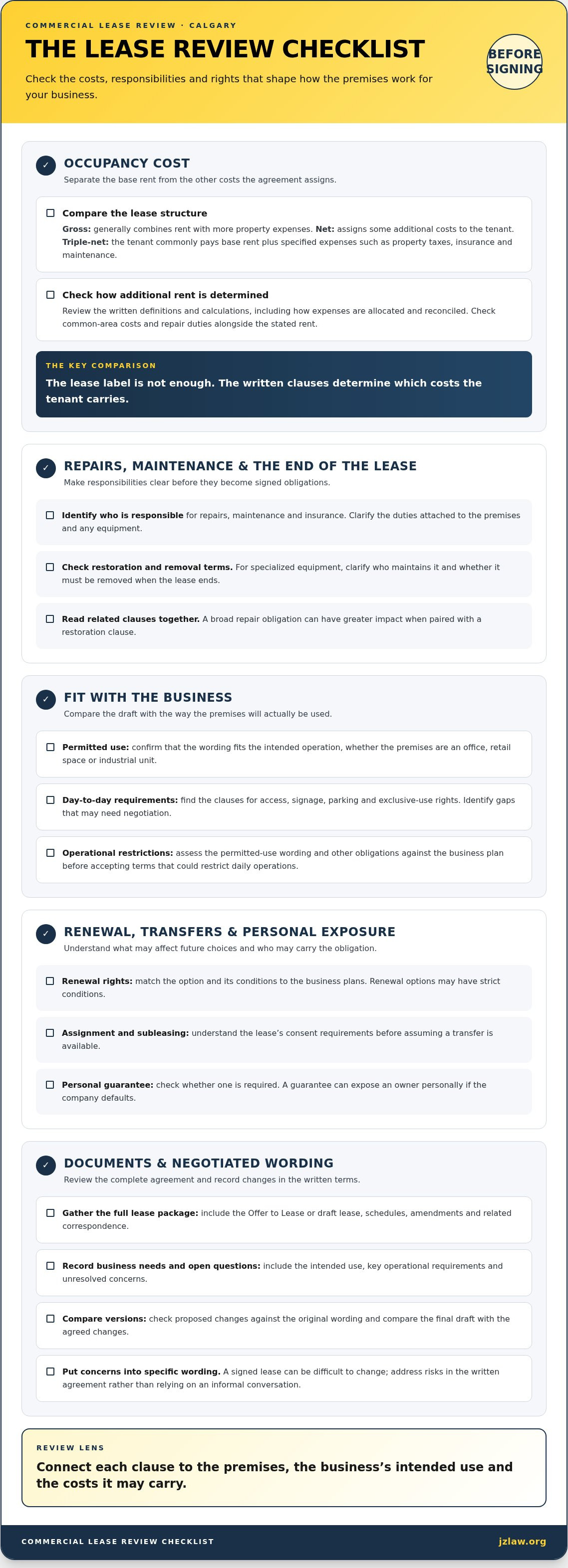
Negotiating means turning concerns into specific wording. A client can mark unclear clauses, identify the business outcome they want, and propose revisions for the landlord to consider. Because a signed lease can be difficult to change, address risks in the written agreement rather than relying on an informal conversation.
Alberta Lease Negotiations
Commercial lease negotiations in Alberta involve the terms the parties put in writing, including rent calculations, maintenance duties, permitted use, and renewal conditions. The agreement should reflect the actual operation, whether the premises are an office, retail space, or industrial unit. Compare the draft with the business plan before accepting obligations that could restrict daily operations.
In Calgary, review time depends on the lease’s length, schedules, and complexity, as well as whether revisions are needed. A complete, straightforward draft generally requires less analysis than an agreement with multiple exhibits and unresolved terms. Provide the full lease package together, then compare proposed changes with the original wording before signing.
Legal review supports negotiation by explaining how clauses work together. For instance, a broad repair obligation can have greater impact when paired with a restoration clause. A lawyer can identify that relationship, explain its practical effect, and help prepare proposed revisions. The landlord may accept, reject, or counter those revisions.
Gross, Net, and Triple-Net Lease Comparisons
A gross lease generally combines rent with more property expenses, while a net lease assigns some additional costs to the tenant. In a triple-net structure, the tenant commonly pays base rent plus specified expenses such as property taxes, insurance, and maintenance. The lease’s exact definitions and calculations determine the tenant’s obligations.
Compare each structure by listing base rent separately from additional rent and checking how expenses are calculated, allocated, and reconciled. A Calgary tenant considering retail or industrial premises should examine common-area costs and repair duties alongside the stated rent. The label alone is not enough: the written clauses determine which costs the tenant carries.
Lease agreements can also address notice, access, signage, parking, and exclusive-use rights. Record each business requirement, find the clause that governs it, and identify any gap to negotiate. A commercial real estate lawyer can help assess the agreement and proposed wording as part of real estate law advice.
How can a lawyer help?
Legal advice can turn a complex lease into clear decisions for landlords and tenants. The lawyer’s role depends on the client’s position, proposed terms, and business objectives.
Landlord and Tenant Representation
For tenants, a lawyer can review the draft, explain obligations, and identify terms that conflict with planned operations. For landlords, legal support can clarify tenant responsibilities, strengthen enforcement provisions, and reduce avoidable disputes. In either role, representation may include marking up the lease, negotiating proposed wording, and comparing the final version with the agreed changes.
Protections for Landlords and Tenants
Commercial tenants generally have fewer legal protections than residential tenants, so the written allocation of duties matters. A tenant should understand repair obligations, expense calculations, permitted use, and any personal guarantee before signing. A guarantee can expose an owner personally if the company defaults. Landlords can use clear payment, insurance, maintenance, and default clauses to define responsibilities and support consistent enforcement.
Comparing Calgary Lease Lawyers
To compare commercial lease lawyers in Calgary, assess whether their work covers lease review, negotiation, and your specific concerns. Ask for a clear explanation of the review process, the written advice you can expect, and how proposed revisions will be handled. Compare the scope and communication approach, not just a brief review of the rent clause: schedules and related documents can change a lease’s effect.
For a review, provide the complete Offer to Lease or draft lease, all schedules and amendments, and related correspondence. Include the business’s intended use, key operational requirements, and a list of unresolved questions. If the parties have already negotiated changes, provide the latest version and written record of those terms so the lawyer can compare them with the final draft.
Risks for Calgary Tenants
Common tenant risks include expenses beyond base rent, unclear repair duties, restrictive permitted-use language, and renewal options with strict conditions. A personal guarantee may also extend the owner’s exposure beyond the company’s obligations. Assess each risk against the business plan: a retailer may need signage and access rights, while an industrial tenant may need clarity about equipment, maintenance, and permitted activities.
For a landlord or tenant seeking advice on a commercial property agreement, real estate law advice can help assess the lease and its business implications before the parties finalize their terms.
Lease renewals, assignments, and termination
Renewal, transfer, and exit clauses shape a tenant’s options throughout a commercial lease commitment. Review these terms against the business’s plans before a deadline or ownership change approaches.
Renewals and Termination
A renewal clause should fit the tenant’s business plan and explain how to exercise the option. Review the notice method, deadline, renewal term, and rent-setting process together. Missing a notice requirement can affect the tenant’s ability to remain in the premises, while unclear rent language can complicate future planning.
Termination provisions also deserve close attention. Identify the circumstances that permit early termination, the required notice, and the steps for handing back the space. For example, a business planning to relocate should understand whether the lease allows an exit and what restoration duties apply. Commercial lease disputes can arise years after signing, including disputes over termination or relocation.
Assignment and Subleasing Restrictions
An assignment transfers a tenant’s lease interest to another party; a sublease allows another occupant to use the premises under an arrangement with the original tenant. The lease determines whether either option is available, and some agreements require the landlord’s written consent. Read the conditions, notice process, and approval language before committing to a proposed occupant.
Check whether the original tenant remains responsible after a transfer, and identify any required documents or financial information. A sale of a business may involve an assignment, but the business sale and lease transfer are distinct matters. Align their timing and conditions so the buyer’s ability to operate from the location is addressed in the transaction documents.
Assignments and Ownership Changes
Assignment language can affect a tenant’s ability to change its ownership structure during the lease. Review whether a change in control, corporate reorganization, or sale triggers consent requirements. A transaction that seems internal may still affect lease rights if the wording treats ownership changes as transfers.
Before an ownership change, compare the lease’s definitions with the proposed transaction structure. Identify who must give notice, whether landlord consent is required, and which party remains liable afterward. If the agreement permits assignment, a lawyer can assist with the transfer and related documents. This review connects the lease commitment with the business transaction.
For a practical review, gather the signed lease, amendments, notices, and relevant sale or restructuring documents. Then map each deadline and approval requirement against the proposed timeline. Residential tenancy arrangements follow a different context; commercial parties should focus on the wording and obligations in their own lease agreements. Addressing these steps early can help landlords and tenants understand their rights before a transfer, renewal, or termination is underway.
Lease reviews during commercial property due diligence
During a Calgary commercial property acquisition, lease review helps reveal how existing agreements affect income, operations, and future decisions. Assess each lease alongside the property’s title and the transaction’s due diligence materials.
For an acquisition, begin by collecting every signed lease, amendment, renewal notice, and side agreement for the property. Compare each document with the seller’s summary of tenants, rents, and remaining terms. A mismatch may change the buyer’s view of expected income or obligations. For a divestment, an organized lease file helps explain the property’s existing commitments and transfer arrangements to a prospective buyer.
Next, map each tenant’s payment duties and rights against the building’s operating arrangements. Costs beyond base rent can involve complex calculations, so identify how common-area expenses, property taxes, insurance, and repairs are allocated. Check the calculation method, permitted adjustments, and reconciliation process. For example, a retail tenant’s lease may treat shared shopping-centre services differently from a warehouse lease’s maintenance obligations.
Shopping-centre leasing calls for attention to the practical relationship between individual units and shared spaces. Review clauses addressing access, parking, signage, permitted use, and common-area costs. Then compare those rights with the property’s operating plans. A tenant’s access needs or signage rights may affect how the premises serve customers, while a landlord’s cost-allocation structure may affect projected occupancy income.
Personal guarantees also deserve focused review during an acquisition or lease assessment. A guarantee can make a business owner personally liable for amounts outstanding if the company defaults, and it may continue after the lease term ends. Identify the guarantor, the obligations covered, and any wording about duration or release. This distinguishes the company’s lease commitment from the owner’s personal exposure.
Property title due diligence is a separate but related step. Commercial real estate lawyers examine legal title to determine whether it is clear and free from encumbrances. Consider that check alongside the lease review: a lease describes occupancy rights and duties, while title review concerns the property’s legal interests and registered burdens. Neither document replaces the other when assessing a proposed purchase.
A practical review can follow this sequence:
Collect leases, amendments, guarantees, and tenant correspondence.
Compare rent and additional-cost provisions with the seller’s records.
Flag renewal, assignment, repair, and permitted-use terms affecting future plans.
Review title for encumbrances and connect findings to the transaction documents.
For a buyer, these steps clarify which lease obligations continue after closing. For a seller, they help organize disclosures and explain existing commercial leasing arrangements. The findings can then inform transaction planning, document revisions, and decisions about the property’s operating structure.
Commercial lease agreement reviews
A commercial lease agreement review examines how written clauses allocate rights, costs, and liability. In Calgary, agreements may be four pages or 40 pages long, but length alone doesn’t determine risk. The practical question is whether the full document supports the intended business operations and clearly assigns each obligation.
Start with the agreement as a connected document, including schedules, exhibits, and amendments. A rent clause may appear straightforward until an additional-rent schedule defines taxes, insurance, or common-area expenses differently. A real estate lawyer can explain how provisions interact, identify unclear wording, and flag terms to negotiate before signing.
A focused review can examine:
Permitted use, access, parking, signage, and any exclusivity rights.
Base rent, additional rent, escalation wording, and expense calculations.
Repair, maintenance, insurance, and end-of-term restoration duties.
Renewal, assignment, subleasing, termination, and notice requirements.
Personal guarantees, indemnities, and responsibility for another party’s conduct.
Personal guarantees require particular attention because they can make a business owner personally liable for amounts outstanding if the company defaults. The guarantee’s wording may also continue after the lease term ends. Identify who guarantees performance, what obligations are covered, and whether the clause addresses duration or release. A company’s lease liability and an owner’s personal exposure are not necessarily the same.
Review liability and indemnity clauses alongside insurance and maintenance provisions. For example, a tenant may assume responsibility for repairs while another clause addresses damage or claims involving the premises. Read each provision together, then note who bears each obligation and under what circumstances. This can reveal gaps or overlapping responsibilities that a rent-only review would miss.
The written agreement also matters if a dispute arises later. Lease disagreements can concern rent increases, repairs, permitted use, relocation, renewal, or restoration. A careful review records what the clauses require and identifies wording that could produce different interpretations. Before signing, compare every negotiated change with the final draft, including attached schedules, so agreed revisions appear in the document.
For the reader, the takeaway is to treat review as a business decision, not a proofreading exercise. Organize the complete agreement, list operational priorities, and connect each priority to the clause governing it. Then seek real estate law guidance to assess the agreement’s terms and liability before committing to them.
JZ Law: John Zang Services
JZ Law is a potential next step when a commercial lease issue intersects with a broader business legal matter. Its John Zang Services include Cannabis Licensing, Taking Companies Public, and Securities Regulation. For example, a business considering a premises commitment alongside a licensing or securities matter may need to assess how those decisions fit its wider plans. The appropriate legal support depends on the issues involved; this section does not replace advice on the specific lease terms or negotiations. If your commercial lease question connects with one of these areas, contact JZ Law to discuss your needs.
Prepare for the Decision Ahead
Before signing or renewing, turn your business priorities into a short written agenda. Note the terms that affect your ability to operate, the obligations you need clarified, and any proposed changes still unresolved. This gives the next conversation a practical focus and helps distinguish essential protections from preferences.
A commercial lease review lawyer in Calgary can assess the agreement in light of your priorities and explain the implications of its wording. If you’re preparing to sign, bring the latest draft and related documents. If you’re already a tenant, organize the signed lease, amendments, and notices relevant to the decision ahead.
JZ Law provides legal services in business and real estate matters. To discuss your lease and determine a suitable next step, contact JZ Law about your lease. A considered review can help you proceed with a clearer understanding of the commitments you’re considering.
Frequently Asked Questions
What About Personal Guarantees?
A personal guarantee can make an owner responsible for specified obligations if the tenant company defaults. Read it separately from the lease, because the guarantor may sign a distinct document with its own scope and duration. For example, check whether it covers rent only or also other amounts the company owes. Confirm who is signing, which company’s obligations are covered, and what events could end the guarantee.
What does a commercial lease review lawyer in Calgary review?
A lawyer reviews the lease as a complete package, including defined terms, schedules, exhibits, and amendments. Check whether the documents contradict one another or leave a key term undefined. For example, compare a schedule’s description of the premises with the main agreement’s permitted-use wording. The review can also identify missing cross-references, incomplete blanks, and inconsistencies between the negotiated draft and execution copy.
What Alberta laws govern commercial leases in Calgary?
Commercial leases in Calgary are governed by their written terms alongside applicable Alberta legislation and common-law principles. The relevant legal framework can depend on the property and transaction, so a commercial lease shouldn’t automatically be treated like a residential tenancy. Start by identifying the premises, the parties, and the agreement’s purpose. Those details help determine which legal rules are relevant to a particular lease or dispute.
What key clauses should tenants negotiate in a Calgary commercial lease?
Prioritize clauses that directly affect the business model and its ability to operate. A customer-facing shop may value signage, parking, access, or exclusive-use wording; a service business may focus on permitted use and operating hours. Review renewal mechanics and transfer rights against future plans, too. Set out each requested change in writing, then confirm that the final draft reflects the negotiated language rather than earlier wording.
Can a Calgary commercial lease lawyer negotiate changes with the landlord?
Yes. A lawyer can explain the effect of proposed terms, prepare revisions, and communicate the tenant’s requested changes to the landlord or the landlord’s representative. The parties may accept, reject, or revise each proposal. For an efficient negotiation, identify the business reason behind each request, such as needing a permitted-use clause that covers planned services. Compare the final document with the agreed revisions before signing.
What should I check in a Calgary commercial lease for additional rent and operating costs?
Check how the lease defines additional rent, which expenses it includes, and how the tenant’s share is calculated. Look for rules covering shared areas, building services, adjustments, and year-end reconciliations. For instance, determine whether the calculation uses the leased area or another stated allocation method. Also note what supporting statements the landlord must provide and how the agreement handles a disputed calculation.
When should I hire a lawyer before signing a commercial lease in Calgary?
Seek legal review before signing an Offer to Lease, letter of intent, or full lease, while proposed wording can still be negotiated. The Offer to Lease or letter of intent is the first document negotiated and executed in the commercial leasing process. Provide the lawyer with the complete document and related schedules, then allow time to review proposed revisions before signing. Early review can help clarify which terms need resolution.



Comments