


Securities Lawyer for Seed Round Financing in Toronto
A seed round is more than a funding milestone: its structure can shape a company’s securities obligations and what investors are told. A securities lawyer for raising a seed round in Toronto can help founders assess financing options, prepare and review investment documents, and consider compliance and disclosure as the deal develops.
It’s reasonable to start with how much capital the business needs and which investors may be interested. A clear legal framework also helps founders understand the terms they’re offering and manage the process carefully. This article explains how securities counsel can support private placements, document preparation, investor disclosures, and compliance planning for Toronto businesses. It also covers when legal advice may help and what to consider before a seed financing.
Table of Contents
Financing for technology and other industries
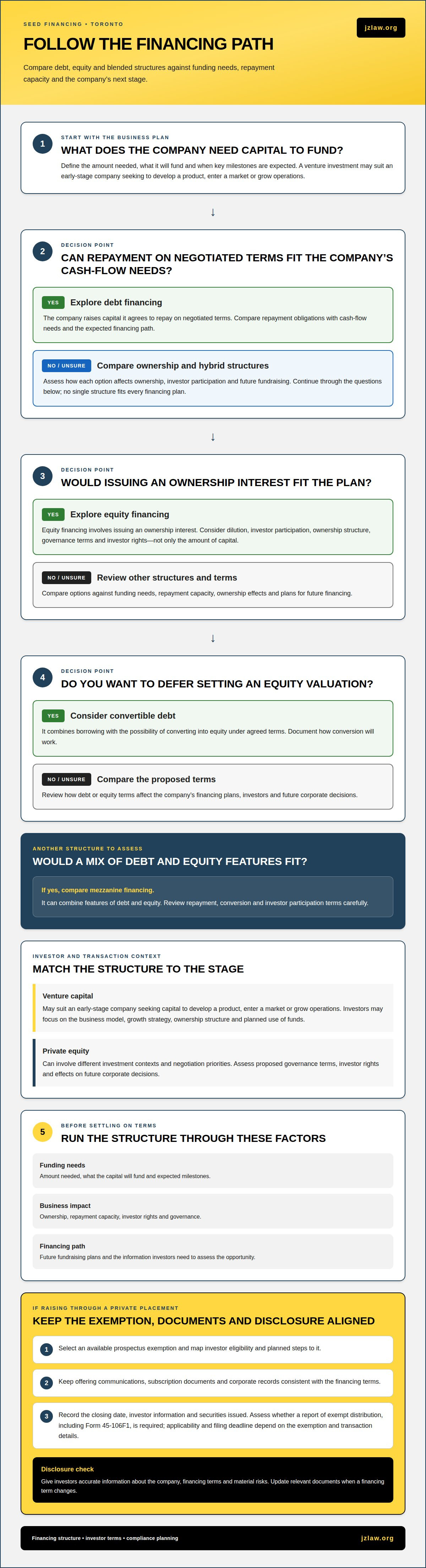
Technology ventures and businesses in other sectors can seek capital through debt, equity, or a combination of both. The right structure depends on the company’s funding needs, investor expectations, and plans for future financing.
Debt and Equity Financing
Public and private financings differ in how a company approaches investors and presents its opportunity. Debt financing raises capital that the company agrees to repay on negotiated terms; equity financing involves issuing an ownership interest. For example, a technology company funding product development might compare borrowing with selling shares, weighing repayment obligations against dilution and investor participation. The financing plan should also account for disclosure and the documents that explain the terms.
Venture and Private Equity Financing
Venture capital may suit an early-stage company seeking investment to develop a product, enter a market, or grow operations. A venture investor may focus on the business model, growth strategy, ownership structure, and planned use of funds. Private equity financing can involve different investment contexts and negotiation priorities. Founders should assess proposed governance terms, investor rights, and effects on future corporate decisions, not just the amount of capital.
Convertible and Mezzanine Financing
Convertible debt combines borrowing with the possibility of converting into equity under agreed terms. Founders and investors may consider it when they want to defer setting an equity valuation while documenting how conversion will work. Mezzanine financing can combine features of debt and equity, making it important to review repayment, conversion, and investor participation terms carefully. Compare each option with the company’s cash-flow needs and expected financing path.
Start by defining how much capital the company needs, what it will fund, and when key milestones are expected. Compare financing structures against those needs, including their effects on ownership, repayment capacity, and future fundraising. A corporate financing plan should also identify the information investors need to assess the opportunity. This helps founders evaluate special terms and choose a structure that supports the business and its next stage.
Shareholder activism became an important part of the Canadian capital markets landscape beginning in 2008, adding another consideration for companies weighing financing and investor engagement.
Private placements
A private placement can help an early-stage company raise capital from selected investors. The structure, investor terms, and communications should align with the company’s financing plans.
Angel investors may have different expectations about valuation, control, and future fundraising. Clear terms and consistent disclosure help reduce misunderstandings between founders and shareholders.
Private Placements for Early-Stage Issuers
For an early-stage issuer, a private transaction may be more suitable than a public offering. Company counsel can help shape offering documents, review investor rights, and coordinate closing requirements. Founders should consider how share classes, voting provisions, and transfer terms could affect later financings. A focused review also helps ensure the transaction clearly records the terms agreed.
Seed Round Costs and Timelines
Legal costs for a Canadian seed round depend on the transaction’s scope, document requirements, negotiations, and number of investors. Timelines depend on company readiness, diligence, investor responses, and how quickly the parties resolve terms. A prepared capitalization table and consistent financing materials can help the legal work proceed efficiently. Changes to investor terms may require further drafting and review.
Private placements and public offerings serve different fundraising needs. A private placement is a targeted transaction; a public offering is designed for broader participation and may involve exchange-related considerations. Companies considering a future public offering should assess how current financing terms, shareholder rights, and disclosure practices may affect that transition. These choices can also influence later mergers or other corporate transactions.
Forming a venture or private equity fund raises structuring questions distinct from financing a single company. Fund documents should explain the investment mandate, decision-making process, and relationship with investors. A company considering this route should distinguish the fund’s structure from the terms of each investment it makes. This clarifies which entity raises capital and which entity holds the investment.
Reviewing these transaction elements together can help founders make informed financing decisions. Securities regulation support can help address the structure and documentation of a private financing.
Securities compliance and disclosure obligations
Canadian seed financing requires the issuer to select and follow an available prospectus exemption. The exemption informs investor eligibility, offering communications, transaction records, and related filings. Before accepting funds, map the planned steps to the selected exemption and ensure each investor receives consistent information. A Toronto startup should also keep its capitalization records aligned with the securities issued and financing documents.
After an Ontario seed round, assess whether the transaction requires a report of exempt distribution, including Form 45-106F1. Whether a report applies, and its filing deadline, depends on the exemption used and the transaction details. For example, a closing with different investor categories may require a careful review of how each subscription fits the chosen exemption. Record the closing date, investor information, and securities issued for that analysis.
Seed investors need accurate disclosure about the company, financing terms, and material risks. For example, don’t present a product roadmap as an achieved milestone. Keep investor presentations, subscription documents, and corporate records consistent; when a financing term changes, update each relevant document. This supports sound corporate governance and can reduce disputes that might otherwise lead to litigation.
Continuous disclosure obligations depend on an issuer’s status and applicable regulatory framework; they are distinct from disclosures made during a private seed financing. The Canadian Securities Administrators proposed changes to National Instrument 45-106 Prospectus Exemptions relating to the Listed Issuer Financing Exemption, including proposed changes to Companion Policy 45-106CP. The CSA’s proposed changes also include amendments to Form 45-106F19 Listed Issuer Financing Document. These proposals concern a listed-issuer financing mechanism, not a universal seed-round filing rule. Issuers should distinguish private financing compliance from public disclosure obligations and monitor how corporate actions affect their status.
The Canadian Securities Administrators published Consultation Paper 51-406 on modernizing the regulation of public companies on July 16, 2026. Its focus is public-company regulation, making it relevant context for issuers assessing how their status shapes disclosure obligations. Issuers should consider this consultation alongside the distinction between public disclosure requirements and obligations arising from a private seed financing, rather than treating it as a universal seed-round filing rule.
Toronto securities lawyers
Toronto seed financing calls for advice that connects securities considerations with a startup’s business plans. A securities lawyer for raising a seed round in Toronto can help founders identify the legal work the transaction requires and consider how financing decisions may affect later corporate steps.
Choosing a Toronto Seed Round Lawyer
Assess whether counsel can explain the proposed structure, investor documents, disclosure process, and corporate governance implications in practical terms. A securities lawyer for raising a seed round in Toronto should be able to discuss how the immediate financing may intersect with future acquisitions or public offerings. Clear explanations help founders understand their choices before those choices shape ownership or decision-making.
Lawyer Fees and Billing Rates
Legal fees depend on the case and are provided after a quote request. Scope, document readiness, investor participation, and negotiation needs influence the work involved. Review the proposed billing arrangement alongside the tasks covered, such as structuring, document preparation, negotiations, and closing support. A defined scope can clarify which changes may require additional work.
Toronto startup legal clinics may offer general legal information, while seed financing often calls for transaction-specific analysis. Consider whether the support addresses your proposed structure, investor terms, and closing documents. The right fit depends on the work required and the level of tailored advice the financing needs.
Before proceeding, organize the company’s financing objectives, current documents, proposed investor terms, and questions about the transaction. These materials give counsel a practical starting point for identifying issues and sequencing the work. To discuss securities regulation for a seed financing, outline your financing objectives.
JZ Law: Securities Regulation
JZ Law provides securities regulation counsel to businesses preparing a seed financing or addressing securities compliance. Founders can turn to the firm to evaluate a private placement, review transaction documents, or consider disclosure obligations alongside their financing plans.
As a company’s objectives develop, JZ Law can also advise on securities matters related to taking companies public. The legal work depends on the transaction, the company’s circumstances, and the decisions founders need to make. Early advice can clarify the issues to address before documents are finalized or investors participate.
To discuss your seed financing or securities regulation needs, contact JZ Law.
Set a clear direction for your next financing step
Before opening investor discussions, define what the capital should enable and how the financing fits the company’s longer-term plans. A securities lawyer for raising a seed round in Toronto can help founders assess the legal work against those objectives and prepare to make informed decisions as the transaction develops.
JZ Law offers securities regulation and John Zang Services, alongside cannabis licensing and support for taking companies public. For a business considering a path from private financing toward public markets, this broader perspective can help connect present decisions with future plans.
Contact JZ Law about your seed round to discuss the financing and the legal support it may require. A deliberate first step can put your next stage on firmer ground.
Frequently Asked Questions
What do securities matters commonly involve?
Securities matters can involve structuring an investment, documenting investor rights, and addressing applicable disclosure and filing considerations. For example, when a company issues shares, its financing documents, corporate records, and capitalization table should reflect the same terms. Advice may also help when investor communications change or a later transaction affects existing shareholders.
What should Toronto startups look for in a securities lawyer for a seed round?
Look for counsel who can explain the proposed financing structure, relevant Ontario securities considerations, and the practical steps needed to complete the transaction. A useful discussion should address how investor terms affect ownership and future decisions, not just document drafting. Founders can also ask how securities work will be coordinated with corporate records and changing financing plans.
Which Ontario prospectus exemptions may apply to startup seed financing?
Ontario issuers assess the prospectus exemptions available under National Instrument 45-106 Prospectus Exemptions. The relevant route depends on the investor and offering circumstances, so founders should not assume one exemption fits every seed round. The analysis should connect the chosen exemption with investor eligibility, offering communications, records, and any applicable reporting obligations before funds are accepted.
How do a SAFE, convertible note, and priced equity compare for Canadian seed financing?
A SAFE generally sets out a future equity arrangement, while a convertible note is debt that may convert into shares under its terms. Priced equity financing issues shares at an agreed valuation during the round. Compare how each document treats conversion, ownership, investor rights, and later financing events; the labels alone don’t determine which structure suits the company.



Comments